Building the Dam Story

At the end, if there is success, one wonders how. Through this wonder one discovers the story. This blog is dedicated to that discovery.

Saturday, June 26, 2010

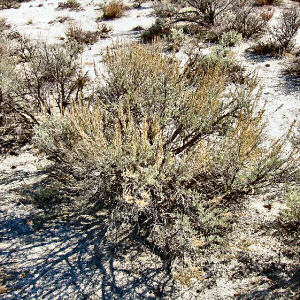
The sage of sagebrush


Sagebrush was everywhere in 1931, when the workers rode the transports from camp to the dam site.

With stems smooth and silvery with evergreen wedge-shaped leaves, the plant is part of the Artemis family named after the Greek virgin goddess of the hunt and wild nature. It is Nevada's state plant.

It can also grow the size of a grown man up to seven feet tall. It's stout at its trunk with silvery branches and dense clusters of tiny yellow or cream-colored flowers that bloom in late summer. It's seeds are tiny and black and each plant may produce up to one million seeds.

The sagebrush supports many wildlife species, such as pronghorn, mule deer, grouse and many small mammals. Sage grouse use large clearings in the sagebrush habitat to conduct spring mating dances. Early morning, one can see in these areas, known as leks, males inflating yellow air sacs upon their chest, puffing up their feathers and spreading their tail feathers before strutting around the lek in the attempt to bond with one or more females. The sagebrush then can be said to act as audience.

The leaves contain aromatic oils with a turpentine fragrance, and after a rainstorm, they perfume the air with a sweet, pungent aroma. For those that come upon sagebrush in the desert, it is delightful. There is so much of it everywhere, it can be said to give the feeling of prosperity. Especially to the men that came upon its abundance, after being so long out of work, and on the streets, standing in line for bread.

When it was actualized, when the men felt they had suddenly "hit it rich" by getting a job at the dam, three square meals a day and a bed to sleep in, suddenly men, like sagebrush, were everywhere.

Yet prosperity is not worth much unless it is useful beyond the day to day requirements for living. And it is known that sagebrush is not only an abundance of color amid the parched desert, it can be used for fuel or as Native Americans once did, used in building. The leaves and the seeds can be eaten. And the leaves, which contain camphor, can be used medicinally for coughs, colds, headaches, stomach aches, fevers and to relieve pain during child birth! Poultices of wet leaves can be applied to bruises to reduce swelling.

Beyond that, Navajo weavers would boil the leaves and flowers to create a yellow-gold color, used to dye wool. The Ute's used the shredded bark for candle wicks.

The men working on the dam made the dam prosperous, and each man had a use far and above his function as a worker. His thoughts created a tempo for the time. His communication with others offered insight to aid in understanding and perspective. In other words, what we see before us is outright amazing, no matter if it's the sight of something along the road. But it's the thing itself that harbors the real amazement. We must get closer still to what interests us. Study it in action.

Thursday, June 24, 2010

The Lonely Road


The dignity of work and the bridging of class, these were the themes of the 1930's, when author Nevil Shute wrote the novel, The Lonely Road.

The truest test for a human is to find him or herself on the lonely road of life and to make one's way forward, despite the sadness of regrets or loss, regardless of hope unrealized.

The most joyful of times is in the unexpected pleasures...of finding oneself in the midst of nature, with or without others nearby, nature bearing heavy of earth and sea, the surrounding of living things one knows really so little about.

To work hard is to realize dreams. To understand another, step down lightly in his shoes.

Wednesday, June 23, 2010

Brother, can you spare a dime?

Brother, Can You Spare a Dime?", also sung as "Buddy, Can You Spare a Dime?", is an American songs of the Great Depression. It was written in 1931 by E. Y. "Yip" Harburg and composer Jay Gorney.


They used to tell me I was building a dream, and so I followed the mob,
When there was earth to plow, or guns to bear, I was always there right on the job.
They used to tell me I was building a dream, with peace and glory ahead,
Why should I be standing in line, just waiting for bread?

Once I built a railroad, I made it run, made it race against time.
Once I built a railroad; now it's done. Brother, can you spare a dime?
Once I built a tower, up to the sun, brick, and rivet, and lime;
Once I built a tower, now it's done. Brother, can you spare a dime?

Once in khaki suits, gee we looked swell,
Full of that Yankee Doodly Dum,
Half a million boots went slogging through Hell,
And I was the kid with the drum!

Say, don't you remember, they called me Al; it was Al all the time.
Why don't you remember, I'm your pal? Buddy, can you spare a dime?

Once in khaki suits, gee we looked swell,
Full of that Yankee Doodly Dum,
Half a million boots went slogging through Hell,
And I was the kid with the drum!

Say, don't you remember, they called me Al; it was Al all the time.
Say, don't you remember, I'm your pal? Buddy, can you spare a dime?


The song asks why the men who built the nation by working on railroads, in the cities building skyscrapers, who fought in the war, who worked so hard as farmers, all the work now supposedly done, what was being given to them, but bread lines.

It was a song that may have reminded the workers on the Hoover Dam that now the greatness of the country was being reformed upon resilience, the ability to bounce back, rather than through industry, the ability to build and grow, which sadly and shockingly had displaced so many.

It was songs like this that were etched in each man's mind, amid the noise of jackhammers, shovels, the jumbo's rolling in and out with men readying the way for dynamite. The music carrying feelings that these men might not otherwise have been able to understand, helping them to relate to eachother. Brother, can you spare a dime?

Tuesday, June 22, 2010

Oral histories

What I love about this project are the connections I am making with museums and universities, newspapers, and now, hearing the oral histories from that particular time and place. Okay, so I'm not talking to the residents of Boulder City that lived there in '32, but resources are coming my way that include the oral history as told by these people.

So, after touring the dam this past week, romping through the museum in Boulder City, staying at the famous Railroad Pass Hotel, and researching like crazy at UNLV, the outcome is rededication. My own oral history of the process of collecting data is told by way of this blog. I'm hoping that here is a place, space and time, to look at the dam from many perspectives in order to gain perspective.

In this I feel satisfied. Even if only I am the reader. It is encouraging to use language in this way. What we express is a gift and often unto ourselves.

Monday, June 21, 2010

On Camaraderie

Place a group of caring human beings together, willing to work towards a project or projects, and the outcome is usually productive. What is it that builds up the good in society but people who find camaraderie while performing or commenting on a project, a tast, even in recreation.

At the dam site, early 1931, workers were thinking of few things but that they had jobs, meaning a paycheck, meaning they could eat and have shelter. Society had come to a place where if these things were intact, then everything was decent with a man. Thus, to share the joy of getting what they felt they needed for a decent life, meant an additional joy, aka camaraderie.

A life that gives a person the feeling he is contributing for the good of others as well as himself is considered productive. And this is the foundation for camaraderie. We see it all the time. At the beach, surfers of a certain age will stand around talking about the conditions. Surf conditions yes, but also the condition of their lives. And often if one feels productive (in and out of the surf)it can inspire others to be as well.

Like the workers at the Hoover Dam, the conditions often depend upon talking to another to realize what we are thankful for and also for addressing common complaints that remind each of us we are still human. Yes,still imperfect and as thus, live in this beautiful imperfect world.

It doesn't take a lot to make a person happy, but to share with others about those things, to have the camaraderie, well, this is the icing on the cake of life.

We need each other, no matter how much we believe we can accomplish something on our own. And it's in the sharing that sweetens life, even if it lends itself to boasting or bragging. In the end without our "peeps" we are sorely at a lack.

Sunday, June 20, 2010

David Gray "This Years Love"

What better way to understand the human condition by way of Hoover Dam than to say it is a monument to the very core of love...it is this years love as it was that years love and into the future, again met with love. Not for the creation itself but for those involved in the act of creation, the coming together, for being the instrument, the example, for exacting the permanent quality of love itself.


Saturday, June 19, 2010

The Tour

Touring the Hoover Dam is a bittersweet experience. It is for one a tourist destination, aka trap. So many visitors to one site, the air is full of "I gotta have something to remind me where I've been," yet the gift store had only a few books on the subject, with a lot of stuff made in foreign countries, which belies the fact that the Hoover Dam supposedly is an icon of American ingenuity...don't get me started. Anyway, with the trapping is also a sense of wonder and awe, as in "can you believe what it took to build this dam?" mixed with all the dam jokes you can imagine...my dam feet hurt, when will this dam tour start, I've never seen such dam tourists...

Meanwhile, crossing the dam by way of being inside the dam is an experience which is a bit heady, considering the location is seven hundred feet above bedrock--an unusual location and half-freaky if you are claustrophobic. Nevertheless, this interior "space" gives the dam's exterior another face, the way one might understand how a clock works by being inside of it.

Often the best part of the tour are the comments by the tour guides. For instance, today a guide suggested that the actual dam was an amazing feat to build, but he believed tunneling the four diversion tunnels were equally impressive, considering safety standards at the time and the fact that each tunnel is almost a mile in length--what with blasting dynamite and racing to get out before the blasts occured...

Anyway, this is exactly why a story on the men who built the dam needs telling, and not just building the dam, but those who worked inside those diversion tunnels. Just like being inside the dam walls, the story of the workers themselves tells how the dam was built.