Building the Dam Story

At the end, if there is success, one wonders how. Through this wonder one discovers the story. This blog is dedicated to that discovery.

Saturday, September 11, 2010

Leonardo da Vinci - building a miracle


The Hoover Dam was built in five years, three shifts working 24 hours a day. The men did not have days off. It was said that if you weren't dead you better get to work. Babies or men, that's all there were on the dam. Meaning, if you cried about how hard things were, you were fired. And if you were a man, you took the work and shut up.

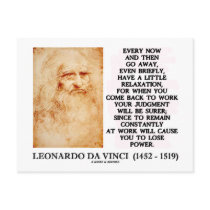
Yet Leonardo da Vinci, the godfather of water theory, noted this in his Treatise on Painting, "...it is well that you should often leave off work and take a little relaxation because when you come back to it you are a better judge."

Had some of the men building the dam taken breaks from their work, perhaps the percentage of accidents would have been less. There were supposedly less than 100 men killed in all five years, which is a fairly good record, considering the danger at hand. However, there were many more men that became ill, whether from dysentery (bad water and food) heat exhaustion or carbon monoxide poisoning. There is of course no record of the illnesses such as these, since if a man wasn't dead he was presumed to be working.

To be a better judge of circumstances regarding work, means really to be a better judge of what's good for you, what's good for the environment, what's good for the job at hand. Given, the dam is a miracle, built by those who worked nonstop, it's a wonder. Yet someday we may look upon the dam like we gaze upon the pyramids, and in this wonder, because of this wonder, we will find the time to relax, if only for a moment.

Thursday, September 9, 2010

Leonardo da Vinci and The Hoover Dam


(http://i.ytimg.com)

Leonardo da Vinci once wrote, "The highest happiness becomes the cause of unhappiness..."

Might this quote be applied to the building of the Hoover Dam? To many, the dam represents a kind of highest happiness, particularly regarding its artful design, it's reach into the sky at 725 feet. It was an amazing feat in the 1930s when it was finished, and remains a landmark of the North American continent.

However, when understanding that this dam changed the Colorado River permanently, changed its course forever, marking the evironment in ways that can be considered destructive, the dam is nothing to be proud of. To some, it is seen an actual cause of unhappiness.

Therefore, would Leonardo da Vinci support the idea of building the Hoover Dam today? As a means of controlling what once was a river prone to flooding, he may have seen the dam as productive. He may have seen it as a means to Southern California obtaining their highest happiness of irrigation and abundant water supply.

Yet, he also may have supported those who believe to tame a river is a means of destroying it and the environment, albeit slowly. He may have taken a progressive look into the future and perceiving factors such as silt build up, salinity factors, use and pollution of watersheds, he may have, given enough time, discovered another way to control the river.

I'd like to think da Vinci would participate in viewing the ecological factors of this dam, (knowing first what would cause unhappiness instead of the other way around) and demonstrate through his art, his power of observation, an analysis that would extend beyond immediacy or profit. In other words, I would like to believe he'd find the elements of the river sublime, of the highest happiness. And thus any project that would change its course would be in effect, reverently considered.

Tuesday, September 7, 2010

Leonardo da Vinci's experience in the belly of the whale


First, to address the belly of the whale...

As Joseph Campbell explains:
The idea that the passage of the magical threshold is a transit into a sphere of rebirth is symbolized in the worldwide womb image of the belly of the whale.

The hero, instead of conquering or conciliating the power of the threshold, is swallowed into the unknown and would appear to have died. This popular motif gives emphasis to the lesson that the passage of the threshold is a form of self-annihilation. Instead of passing outward, beyond the confines of the visible world, the hero goes inward, to be born again...[a] life-centering, life-renewing act.

Leonardo da Vinci took on the world by asking questions about everything he experienced. This said, he may have appeared continually passing across this threshold, from outside to inside and back again. Perhaps this is why he did not finish his work at times. He was constantly in passage, neither outward, beyond the confines of the visible world, nor inward, engaging in so-called self-annihilation.

Therefore, da Vinci might be said to be an explorer rather than a seeker. His observations rapid, nearly brisk. His wellspring of questions allowing him transitions from one subject to another seemingly effortless. For example, drawings of his studies of birds in flight might occur in the morning while his theory of water may have been thought through late at night under a yellow-flamed kerosene lamp.

Saturday, September 4, 2010

Leonardo da Vinci's power to question


(Leonardo da Vinci's drawing (vision?) of a flying machine)

In the book How to Think like Leonardo da Vinci by Michael J. Gelb, a parallel of our time with the Renaissance can be a starting point to view what might be called "the power of the maestro."

The Renaissance was a time in history that occurred after the Black Plague swept through Europe and eliminated almost one half of the population. As the wealthy began to invest in independent scholarship, answers were sought outside of prayer and dogma. Intellectual energy surged at this time and human power and potentiality was reborn. This included a number of discoveries and inventions such as the mechanical clock, the magnetic compass and the printing press. It was precisely this passion for discovery that helped to meet the challenges of the time.

With no concept of time in the 1400s, versus being controlled by the clock in the 2000s, this parallel remains: to be an independent thinker requires one to recognize one's power to question. It is this power that leads one, as it did da Vinci, to develop theories or as da Vinci suggests, "to work miracles..." da Vinci.

Thus the miracle of understanding something such as the power of water lies in the questioning of that power.

Consequently, through this questioning comes knowledge, "I know how to cut off water from the trenches...in conducting water from one place to another."

Therefore is it a guess or a theory, if Leonardo da Vinci knew that independent thinking would result in the building of the Hoover Dam, would he consider it a miracle of human genius? I believe so.

His drawings, as we shall see in further blogs, proves his vision for things unheard of and never before considered were, in fact, miracles in the making.

Friday, September 3, 2010

Leonardo da Vinci's water theory


Leonardo da Vinci--Water Studies c. 1513

Leonardo da Vinci was intrigued by water, perhaps even feared water. His water theory can be considered the bedrock of hydrology in the history of the study of water.

He was probably the first hydrological experimentalist to design and build his own instruments to test his hypotheses.

Da Vinci developed hypotheses while describing and classifying hydrological processes. For example, he understood that because of the hydrological cycle, water would pass through the major river systems numerous times.

His description of water is "the vehicle of nature" ("vetturale di natura"), believing water to be to the world what blood is to our bodies.


Leonardo described water as "the vehicle of nature" ("vetturale di natura"), believing water to be to the world what blood is to our bodies.

Leonardo understood that water circulated according to fixed rules. The fact that it falls as rain or rises up from springs under the ground.

Accordingly, he understood that water is indispensable to humans, animals and plants, yet it can also be the instrument of their destruction. Its power is irresistible.

Leonardo's study of the motion of water suggests it was a way in which to understand his own fear of moving water.

He supposed the principle of erosion: "Water gnaws at mountains and fills valleys. If it could, it would reduce the earth to a perfect sphere" (Codex Atlanticus, 185v).

Leonardo studied water perhaps to be able to control it. He lived through terrible floods and storms, he witnessed destruction by water first hand.

This is just the tip of the iceberg regarding da Vinci, his water theory and his thoughts on the subject of water. More to come in future blogs...

Thursday, September 2, 2010

hydrology--the cycle of life


We are all familiar with the circle of life, as Simba the lion learns in the film The Lion King

However without the cycle of life, or the way in which water moves throughout the Earth, there would be no life at all.

Hydrology is the study of the way in which water moves throughout the Earth through different pathways and at different rates. The first example of this is evaporation of water from the ocean, which forms clouds. As the clouds drift over the land it produces rain. The rainwater flows into lakes, rivers, or aquifers. The water in lakes, rivers, and aquifers then either evaporates back to the atmosphere or eventually flows back to the ocean, completing a cycle.

As Leonardo da Vinci discovered in the early 1500s, "Water is the life force of all nature." In effect, water as it moves through its cycle is life itself. If we harm the water, we are harming ourselves.

However we do not always know or understand the ways in which we are harming the water. When a dam is built it is said to better use the water in an area, use the water to perform tasks, such as generate electricity or to be used for an area a long way away. To ask water to perform these tasks is not necessarily wrong, but if it means the water will be harmed too greatly by this use (and sometimes there may be no way of knowing until later) then we need to learn from this.

This gentle spirit of caring for water and its cycle will mean that life can continue for all creatures here on earth. To care about water means to care about ourselves in a beautiful and necessary way.

Tuesday, August 17, 2010

The Father of Public Power--David E. Lillenthal


From http://www.tva.gov/heritage/illenthal/index.htm


The Father of Public Power
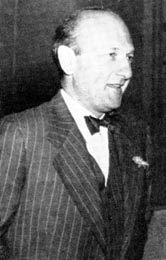
Boyish in appearance but hardheaded and knowledgeable, David Lilienthal built the TVA power system according to one guiding principle: affordable power for everyone in the TVA region.

When people met TVA’s three original Directors, he was the one who looked out of place. Two of the triumvirate were white-haired academics. The third, and the last to join, was not yet 34 — more than 20 years younger than either of his colleagues.

He looked even younger than that. During his first days at TVA in 1933, David Lilienthal was sometimes mistaken for an office boy. His youthful appearance belied his extensive experience and accomplishments.


The Tennessee Valley owes its network of municipal and cooperative power distributors to the vision of David Lilienthal, one of TVA’s three original directors.
Born in the back of a small-town grocery store in Morton, Ill., the son of a struggling Jewish family, Lilienthal grew up in Indiana with dreams of being a writer. He attended DePauw University, graduated when he was only 20, and went on to Harvard Law School. As a young lawyer he handled cases for the city of Chicago and, still in his twenties, developed a reputation for having a comprehensive understanding of public utility problems.

Through his litigation work for the city, Lilienthal came to believe there were some services so essential to modern day-to-day living that they must be made available and affordable for everyone.


From http://www.tva.gov/heritage/illenthal/index.htm