


Desperation hung in the air. The men were hungry and anxious for they knew not what was to come of the future. Basic needs had been stripped bare. And there were so many of them seeking jobs. Where would there be a place that they could all find work and at least care for themselves with some kind of dignity?
The Hoover Dam linked these desperate men by providing a big job, which in turn made the men feel not just important but real again. For many, there was nothing more they needed than to believe again in the future, and all they could see of the future was having a job and a paycheck. Dreams of anything else were sheer fantasy, like feelings of love without anything to love.
The dam today is a powerful medium, a message of what men can do when they have no choice but to work as if in a fairy tale. To blast through rock, to dig and shovel, then pour that holy concrete day in and day out, it was the hardest work there could be. Yet a job that provided renewed pride just for the opportunity to be working aside other men towards an end. The outcome, the finished job, the happily ever after.
Tuesday, June 1, 2010

Monday, May 31, 2010
Crying for fair
Fair. Equivalent. Equal. Only in mathematics can we celebrate such an expression when it means what one gets the other gets as well. Mothers and teachers make such distinctions quite often because children come to expect this, are told being fair is the best way to be.
And yet there is war.
Thus on this side of the equation someone wants something for which the one on the other cannot or will not give. Mutually both sides cry for fair. They fight for it. Are diligent until the end for it. And so a warrior that has learned what fair is by way of upbringing or education must then learn how to fight for what they believe fairness is.
In the 1930's as the Hoover Dam was just starting to be built, if a man got a job working on this project he probably didn't cry for fair when he was told he'd only make four dollars a day and be expected to work eight hours straight. In fact, most workers accepted this wage with great satisfaction, just to have a job at all, even though many had earned twice the amount and more before the depression.
Thus maybe being "fair" is really just ideology, unless of course it's mathematics.
However, for those who have fought a war on behalf of fairness, towards an idea of what fair is, let that person be honored for it, to the nth degree.
For without the people who take a stand for what they believe, there is only mathematics, and in that the equation of humankind becomes nil.
And yet there is war.
Thus on this side of the equation someone wants something for which the one on the other cannot or will not give. Mutually both sides cry for fair. They fight for it. Are diligent until the end for it. And so a warrior that has learned what fair is by way of upbringing or education must then learn how to fight for what they believe fairness is.
In the 1930's as the Hoover Dam was just starting to be built, if a man got a job working on this project he probably didn't cry for fair when he was told he'd only make four dollars a day and be expected to work eight hours straight. In fact, most workers accepted this wage with great satisfaction, just to have a job at all, even though many had earned twice the amount and more before the depression.
Thus maybe being "fair" is really just ideology, unless of course it's mathematics.
However, for those who have fought a war on behalf of fairness, towards an idea of what fair is, let that person be honored for it, to the nth degree.
For without the people who take a stand for what they believe, there is only mathematics, and in that the equation of humankind becomes nil.
Sunday, May 30, 2010
Hard Boiled Hats

A fun fact: Author Franz Kafka might have been the first to develop the first civilian hard hat when he was employed at the Worker's Accident Insurance Institute for the Kingdom of Bohemia in 1912.
However in the United States, the E.D. Bullard Company was a mining equipment firm in California, selling protective hats first made of leather. His son, E.W. Bullard, arrived home from World War I with a steel helmet providing the idea for a "Hard-Boiled Hat", made of steamed canvas, glue and black paint.
These hats weren't used in the beginning of the building of the dam, but once discovered became imperative (though not required) at the Hoover Dam work site. However with rocks capable of falling hundreds of feet onto a man's head, yes, the hard hat was coveted by anyone wishing to avoid such tragedy.
Technology is like the first hard hats these men wore. It provides a kind of protection nobody expected even just a few years ago. Protection? What, seeing that one's sheer identity can be robbed as a result of logging on to a computer?
Yet if we look at it more closely, moving towards its evolved state we find that as we connect, in any given virtual social network, it seems such thing as theives and weirdos do get filtered out. Of course they can try to sneak in, much as the thieves sneaking around the dam job site would steal whatever the men might carelessly leave about, namely their money from slim paychecks. Yet to rob from a working man is not only a poor route to go, it will always have zero virtue in the eyes of the successful thieves, that can steal from the rich to give to the poor.
Thus maybe what we get ourselves into helps us in our creating a way out. And it's this act of creation that is the thrill, the real high-lying outcome of it all.
What the hard hats did for these workers in those days, in terms of protection, was a necessity.
And what technology does now (for those willing to express themselves through it) is protect the developing creativity, shared one to another. Yes, technology might be considered a necessity as well then.
For art is expression that inspires us to wonder. And not only is it safe to wonder, one might say it is a necessity.
Saturday, May 29, 2010
Old friends
A good friend's father reunites with his military friends regularly. They are getting old now and its harder to get together, but the trip becomes that much more memorable, meaningful, insightful. The longer time stretches over an event, a time in one's life, it receives more color, rises more distinctly from the mundane. Our perceptions of what matter may change but we hold tight to how these perceptions continue to affect us.
The old friends of the Hoover Dam may have insisted on calling the dam Boulder. As if the name gives meaning to the experience as much as all the work that was accomplished together. When they use the words "old friend" and look into each other's eyes, do they see the fella that high scaled seven hundred feet above the canyon? Do they remember sitting across the table from their buddy as he devoured another pork chop or biscuit? What is recorded is a feeling for a time they know not to forget. And how do they "know" such things?
How do we recognize what needs remembering? We recognize it by the medium that is its result. Job sites will do this, especially ones in which hold so much wonder, like this dam does. It becomes a medium for which we set our memories upon. As a good friend, offering up sincere messages for the future, universal for all to learn from.
The old friends of the Hoover Dam may have insisted on calling the dam Boulder. As if the name gives meaning to the experience as much as all the work that was accomplished together. When they use the words "old friend" and look into each other's eyes, do they see the fella that high scaled seven hundred feet above the canyon? Do they remember sitting across the table from their buddy as he devoured another pork chop or biscuit? What is recorded is a feeling for a time they know not to forget. And how do they "know" such things?
How do we recognize what needs remembering? We recognize it by the medium that is its result. Job sites will do this, especially ones in which hold so much wonder, like this dam does. It becomes a medium for which we set our memories upon. As a good friend, offering up sincere messages for the future, universal for all to learn from.
Thursday, May 27, 2010
Thicker than water
This Todd Hannigan video is a reflection of the way water is used so liberally and melodically effectively--to compare experiences, feelings, and objects.
Truly we do gravitate to the natural elements such as water in and of our universe. We love water, it's obvious, and we know the human body is made up of mostly water, yet we cannot become it. And it seems objectifying it oftentimes invites greed.
Regarding the use of dams as a means of "giving" water to people who need it, such as in poverty stricken Southeast Asia, how can the dams be refused? Malnourished thirsty people versus decision makers thirsting to control. Thus once a dam starts to be built, (or is removed for that matter) it has become its own medium, it takes on a story all its own. Thicker than water for sure.
Wednesday, May 26, 2010
Faces of a time
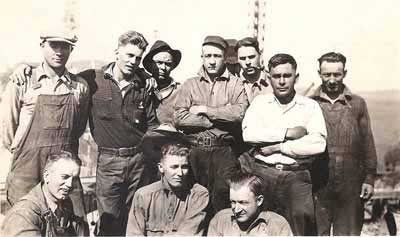
In this picture is grandfather, just one of many who helped build the Hoover Dam. He is the one that hides his fatigue, that has known easier times. There is however a greatness of spirit in his eyes. He has overcome his fear, the fear of not being able to take care of his family, and in this fear he has joined his spirit with so many others.
How do people overcome their fears but with the help of their friends? In work in war in waging a life of strife, there is a presence of patience among men and women. There is solitude in the most remarkable places and times. Amidst the building of the dam, these men may have been alone with their thoughts but had one another to see these thoughts through, to level, to balance, to befriend.
Tuesday, May 25, 2010
Seeing the Dam-Age
Marshal McLuhan, who coined the phrase "The media is the message", has an anecdote in Gutenberg Galaxy which demonstrates that what one sees in another person, in a situation, in history, is a learned response.
The anecdote centers on a team of French health officials showing a group of African villagers, that had never seen a film before, a public health movie.
After the film was over the team asked the villagers what they had seen. The officials expected to hear something about the health dangers of water after it's been standing too long, which was their own, albeit, perspective and purpose.
And after a period of silence one of the villagers spoke up. "They have chickens there, too," he said.
The health officials were obviously set back by this answer. But what did they expect? The villagers had not learned to see film in the same way. They had not learned what to see. And equally so, the health officials had missed the chickens altogether.
As the Hoover dam was being built, it was very likely that the workers forgot or maybe never even considered why it was being built. In other words, they did not see the "why" of the dam so much as having learned to see the "how" of it. They worked to build what would serve themselves through employment. For most it was all they needed to see.
Perhaps if those same workers had learned to see the whole of what they were creating, for instance, to see the permanent damage the dam would do to the river's ecosystem, it may have changed the course of history.
However for many, what they saw within themselves was desperation, confusion, and disappointment. They'd been taught to see a dream and come close to living it. But then it vanished right before their very eyes. Faced with an economic depression that only a few saw coming, building the dam was viewed as hope itself, as relief from such devastation.
And were there teachers or gurus or spirit guides or what have you on even a single corner? There were just more people like themselves. A generation that would have to learn to see not just their own dreams but also into each other's future.
Today some may view the dam as a sign of our failing times, that it's ruined a great river by capitalizing on the river's wealth.
Yet one can also see the dam for its wealth in and of itself--as a feat such as Stonehenge, without need for anything other than awe.
Nevertheless, it's a icon for discovering "they had chickens, too."
We see what we learn to see. We learn to see the whole.
The anecdote centers on a team of French health officials showing a group of African villagers, that had never seen a film before, a public health movie.
After the film was over the team asked the villagers what they had seen. The officials expected to hear something about the health dangers of water after it's been standing too long, which was their own, albeit, perspective and purpose.
And after a period of silence one of the villagers spoke up. "They have chickens there, too," he said.
The health officials were obviously set back by this answer. But what did they expect? The villagers had not learned to see film in the same way. They had not learned what to see. And equally so, the health officials had missed the chickens altogether.
As the Hoover dam was being built, it was very likely that the workers forgot or maybe never even considered why it was being built. In other words, they did not see the "why" of the dam so much as having learned to see the "how" of it. They worked to build what would serve themselves through employment. For most it was all they needed to see.
Perhaps if those same workers had learned to see the whole of what they were creating, for instance, to see the permanent damage the dam would do to the river's ecosystem, it may have changed the course of history.
However for many, what they saw within themselves was desperation, confusion, and disappointment. They'd been taught to see a dream and come close to living it. But then it vanished right before their very eyes. Faced with an economic depression that only a few saw coming, building the dam was viewed as hope itself, as relief from such devastation.
And were there teachers or gurus or spirit guides or what have you on even a single corner? There were just more people like themselves. A generation that would have to learn to see not just their own dreams but also into each other's future.
Today some may view the dam as a sign of our failing times, that it's ruined a great river by capitalizing on the river's wealth.
Yet one can also see the dam for its wealth in and of itself--as a feat such as Stonehenge, without need for anything other than awe.
Nevertheless, it's a icon for discovering "they had chickens, too."
We see what we learn to see. We learn to see the whole.
Subscribe to:
Posts (Atom)

 Posts
Posts

