


A good friend's father reunites with his military friends regularly. They are getting old now and its harder to get together, but the trip becomes that much more memorable, meaningful, insightful. The longer time stretches over an event, a time in one's life, it receives more color, rises more distinctly from the mundane. Our perceptions of what matter may change but we hold tight to how these perceptions continue to affect us.
The old friends of the Hoover Dam may have insisted on calling the dam Boulder. As if the name gives meaning to the experience as much as all the work that was accomplished together. When they use the words "old friend" and look into each other's eyes, do they see the fella that high scaled seven hundred feet above the canyon? Do they remember sitting across the table from their buddy as he devoured another pork chop or biscuit? What is recorded is a feeling for a time they know not to forget. And how do they "know" such things?
How do we recognize what needs remembering? We recognize it by the medium that is its result. Job sites will do this, especially ones in which hold so much wonder, like this dam does. It becomes a medium for which we set our memories upon. As a good friend, offering up sincere messages for the future, universal for all to learn from.
Saturday, May 29, 2010

Thursday, May 27, 2010
Thicker than water
This Todd Hannigan video is a reflection of the way water is used so liberally and melodically effectively--to compare experiences, feelings, and objects.
Truly we do gravitate to the natural elements such as water in and of our universe. We love water, it's obvious, and we know the human body is made up of mostly water, yet we cannot become it. And it seems objectifying it oftentimes invites greed.
Regarding the use of dams as a means of "giving" water to people who need it, such as in poverty stricken Southeast Asia, how can the dams be refused? Malnourished thirsty people versus decision makers thirsting to control. Thus once a dam starts to be built, (or is removed for that matter) it has become its own medium, it takes on a story all its own. Thicker than water for sure.
Wednesday, May 26, 2010
Faces of a time
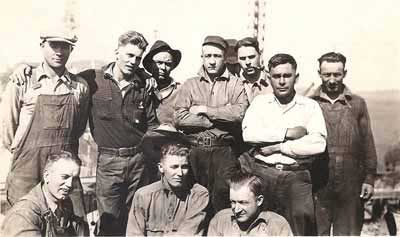
In this picture is grandfather, just one of many who helped build the Hoover Dam. He is the one that hides his fatigue, that has known easier times. There is however a greatness of spirit in his eyes. He has overcome his fear, the fear of not being able to take care of his family, and in this fear he has joined his spirit with so many others.
How do people overcome their fears but with the help of their friends? In work in war in waging a life of strife, there is a presence of patience among men and women. There is solitude in the most remarkable places and times. Amidst the building of the dam, these men may have been alone with their thoughts but had one another to see these thoughts through, to level, to balance, to befriend.
Tuesday, May 25, 2010
Seeing the Dam-Age
Marshal McLuhan, who coined the phrase "The media is the message", has an anecdote in Gutenberg Galaxy which demonstrates that what one sees in another person, in a situation, in history, is a learned response.
The anecdote centers on a team of French health officials showing a group of African villagers, that had never seen a film before, a public health movie.
After the film was over the team asked the villagers what they had seen. The officials expected to hear something about the health dangers of water after it's been standing too long, which was their own, albeit, perspective and purpose.
And after a period of silence one of the villagers spoke up. "They have chickens there, too," he said.
The health officials were obviously set back by this answer. But what did they expect? The villagers had not learned to see film in the same way. They had not learned what to see. And equally so, the health officials had missed the chickens altogether.
As the Hoover dam was being built, it was very likely that the workers forgot or maybe never even considered why it was being built. In other words, they did not see the "why" of the dam so much as having learned to see the "how" of it. They worked to build what would serve themselves through employment. For most it was all they needed to see.
Perhaps if those same workers had learned to see the whole of what they were creating, for instance, to see the permanent damage the dam would do to the river's ecosystem, it may have changed the course of history.
However for many, what they saw within themselves was desperation, confusion, and disappointment. They'd been taught to see a dream and come close to living it. But then it vanished right before their very eyes. Faced with an economic depression that only a few saw coming, building the dam was viewed as hope itself, as relief from such devastation.
And were there teachers or gurus or spirit guides or what have you on even a single corner? There were just more people like themselves. A generation that would have to learn to see not just their own dreams but also into each other's future.
Today some may view the dam as a sign of our failing times, that it's ruined a great river by capitalizing on the river's wealth.
Yet one can also see the dam for its wealth in and of itself--as a feat such as Stonehenge, without need for anything other than awe.
Nevertheless, it's a icon for discovering "they had chickens, too."
We see what we learn to see. We learn to see the whole.
Monday, May 24, 2010
Diverting the flow

Deep inside the earth the dynamite "Hercules" made way for the river to be diverted. When it was time, the river, as wild as it was, went willingly. As if it only needed somewhere to go.
In moments of desperation it seems alright to just go for it, full force, needing only a place to go. In time, such actions are cause for wonder.
Do we stop the flow? And as we divert are we ever completely aware of the consequences?
And finally, the consequences change over time. Tunnel workers at the dam in the early 1930's may not have thought at all about the consequences of a river diverted except that it was to "tame" and use the wild water. We revisit that time to understand change, to witness it as if we were there all along.
Sunday, May 23, 2010
Seeing beyond privacy
Privacy is a thing of the past, so says many. We need strategies to understand and philosophize this phenomenon that has begun with or without us.
While the dam was getting built, men worked side by side every day in elements that were harsh and "unreal." They endured with a kind of camaraderie the way soldiers depend on one another. This is common in many jobs, the "looking after" of other employees, the celebrating small victories on the job together. Privacy then is not an issue but rather privacy is shared.
Can we share with others what we feel might help ourselves/help others? Absolutely.
As the dam got built...so did the workers. As technology increases the capacity for "sharing"...so too our capacity for seeing beyond "privacy".
Thursday, May 20, 2010
Dynamite
Imagine dynamite blasting from under the earth and you are there. Inside the diversion tunnels the noise was horrendous. Men reported they lost partial hearing ability after being submitted to the explosions. The river however was a sweet repose, even as it rushed and pushed its way. The Colorado in its natural response to nature would never blur the senses. Our aptitude to demolish, eliminate, destroy is uncanny. Our ability to build such things as the Hoover Dam also uncanny. Yet to live without taking more than we need might appear easy, such as a life beside a river, but it requires the discipline of doing nothing. Is doing nothing possible? And have we demolished, eliminated, destroyed the grace of holding still a moment?
Let the dynamite tell its story. It's much more spectacular. It brings results.
Let the dynamite tell its story. It's much more spectacular. It brings results.
Subscribe to:
Posts (Atom)

 Posts

