Building the Dam Story

At the end, if there is success, one wonders how. Through this wonder one discovers the story. This blog is dedicated to that discovery.

Monday, May 3, 2010

Hot times in Hoovervilles


They still exist, Hoovervilles. HWe just call them a different name such as Tent City, in Sacramento, CA, where recently the "residents" were kicked out...And do we hear about where these people go afterwards? Well, it'd be worth knowing, considering these times.

If you've ever been desperate, in a place that was a simple roof over your head (even a tent, or for that matter a blanket) and there are other people around you are in the same predicament, you can half way stop being angry about your situation. Though you don't lose sight of the fact that things aren't as good as they could be, you can still feel gratitude, camaraderie, you can feel as though you are in the midst of recovery.

The Hoover Dam workers found Ragtown, a so-called Hooverville by the side of the Colorado River. Many lived there for months, calling it home. Here a man could talk to other men about jobs and the means by which to get by. A woman could share childcare duties with other mothers to get chores done by the river without worrying their kids would get swept into the fierce current.

In Ragtown, nobody cared much about wardrobe, except if it was clean enough, or where they'd get their next meal. Sharing became the norm.

What we share today is similar to what we shared in the 30's at the time the dam was getting built. Ideas and tools and laughter and food...

Doesn't it seem like we share what we've got even with strangers when we can rally with hope for tomorrow?

Hoovervilles of Today


From NPR

Sacramento Tent City Reflects Economy's Troubles
by Richard Gonzales

Date: March 16, 2009


Job losses, home foreclosures and a deepening recession are sending scores of newly homeless people into a makeshift camp along the banks of the American River in Sacramento, Calif.

The tent city, spread over an area the size of several football fields, has local officials scrambling over how to handle the area's homeless crisis.

More than a year ago, a handful of homeless people staked out the site on the northern edge of downtown Sacramento. Now there are more than 100 tents and anywhere between 300 to 400 people living without running water or sanitation. Their only protection from the elements is nylon tents and plastic tarps.

A single mid-day meal is available at a nearby faith-based charity called Loaves and Fishes. That's where social worker Jim Peth says he's seeing a lot of the newly homeless.

"That's been very recent," Peth says. "And you can tell because they're much better dressed. They're disoriented; they don't know where to go. So they're easy to spot."

Take, for example, 53-year-old Dave Cutch. His clothes suggest a suburban hiker, except that he stands in a muddy patch outside a tent that he's called home for the past two months. A year ago, he was a welder in Colorado.

"So the company I'm working for, I get laid off," Cutch says. "I qualified for unemployment — 24 weeks. My car's paid off, my truck's paid off, my bike's paid off, everything except for my house payment, right? But I feel like I'm still going to pull out of it."

Months went by without work. Cutch lost his house, his car was stolen, his savings ran out. This past August, he took up a friend's invitation to come to California, but that didn't work out, either.

"Trying to get back on my feet, you know," Cutch says. "Daily, I still go out looking for a job. But the thing I'm running into is when I put the application in they ask me, 'Where do you live at?' And I go, 'Actually, I don't have a place to live. I'm homeless.' That's it. They don't hire me."

Tent cities have sprung up in other locations, including Portland and Phoenix. But the one in Sacramento is drawing national attention, much to the chagrin of city leaders. Mayor Kevin Johnson says he can foresee making the tent city permanent, but not on its current site.

"We need tough love, meaning we have to be compassionate to this population," Johnson says. "I am very committed to it; I feel we have a moral obligation."

At the same time, though, Johnson says the city must eventually adopt a "zero tolerance" approach to the river-side campsite. "It can't happen tomorrow, though," he says.

Elizabeth Hodge (Bobblehead) wrote:

Remember when the military bases were closed? Most of the housing on the bases still exists and are unoccupied. So government housing is available, it should be extended to those who need it. Within driving distance of the tent city is a former military base with plenty of housing, empty, and decaying. Tuesday, March 17, 2009 1:29:24 PM


Sandra Hucher (helpfulBrit) wrote:

Could we make this discussion a little more helpful by brainstorming ways to help these not-wanting-to-be-homeless people? Seems to me they can choose a spot that the Mayor approves and put these people to work building themselves a community of housing and vegetable gardens. Make it eco-friendly. The city would pay them a wage and local businesses could donate lumber, plumbing, electrical stuff, etc. Just like Habitat. There must be many of those homeless who have many skills they can share. They could form a committee and work together. The city should pay them out of their part of the stimulus bill - or just from their coffers. It will be a positive and long lasting effort that will benefit Sacramento in the end. In these times we really have to be a bit more creative to help each other. I should think plenty of retired people would be willing to help also. Getting into action of building something rather than dreary job searching would lift morale and achieve a lot more, I would think.
Tuesday, March 17, 2009 2:04:02 AM


Text by permission Copyright 2010 NPR

Learning the ropes


There were young men on the job who delighted in an opportunity to perform feats of extreme danger. They could hang all day by ropes against the canyon walls, as if performing a highwire act.

Yet there were also men such as the elderly gentleman who had to close his store for lack of customers, due to a downturn in a once thriving economy, leaving only a sign on the door that said: Stay well.

As the lone pharmacist in his small town, now without a drugstore, he knew people would have to travel thirty miles away for their medicines, or more likely, go without. It was difficult to leave them. Yet this day in May, 1931, under the hot sun of a brilliant Oklahoma sky, this man started out all over again, heading west. Heard there was work on a dam being built in the middle of the desert. Hitched a ride and said good bye to his past--determined himself to stay well.

There were many men like this that came to the Hoover Dam to work during this hot, dry month of May. Yet having to learn the ropes by working a job they'd never done before didn't give them reason to complain. A job was a job and they knew it had to be done the best they could do it. Otherwise there was somebody else waiting in line for the chance.

With more hope and guts than even they expected to have, these older men didn't arrive asking to be cared for, or asking who was going to help them. They had to set their pride down and be set apart by their willingness to learn and to keep well, despite the harshest conditions.

Thus their hard work without complaint truly involved a greatness of spirit. A formula ensuring care for the deepest of needs.

Sunday, May 2, 2010

The brilliance of design


Ahtletes know the brilliance of design, the way architects do, the way doctors must. There is an exactness a regiment that if followed offers known results. It does not take discipline to design something brilliant. Discipline is needed in carrying out that design.

Were the workers on the dam disciplined? If they weren't in the beginning they learned. Their so-called discipline was mostly fueled by the opportunity to earn money. Money not made, but earned.

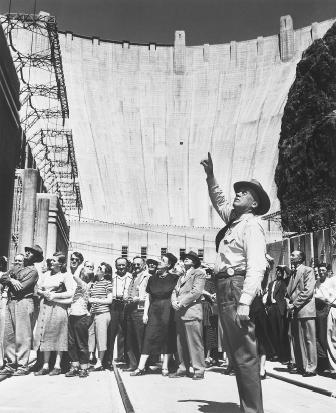
Discipline as a result of this brilliance of design offered young men an opportunity to be a part of something bigger than imagined. A dam that shot up into the sky 735 feet, was a feat uncontested at the time. A brilliant design that would only come to life by hard work.

Hard work was not known by taking days off as much as it was by working in shifts. There were 3 shifts for every 24 hours a day, and working "around the clock" the dam was built in record time. Thus, part of the brilliance of the design is timing. The dam designers may not have considered the workers who ultimately put their lives on the line. Yet they must have known the discipline needed to carry out the design.

Not only was the dam built with amazing speed as men acquired this discipline, the dam remains today as a design of brilliance.

The fallacy of permanence


The Hoover Dam in all ways appears permanent. When it was just beginning to be built, the idea of doing just this, building something that would last "forever" was exciting. Much like the pyramids in Egypt that still stand today, the Hoover Dam exacts that much attention.

It is an odd power to be part of something that will seemingly outlast many lifespans. Envision now what the dam might look like thousands of years from now. Will it appear the same? Will it still be responsible for redirecting the Colorado River?

Another way to see the future of the Hoover Dam is through viewing the past lives of the men who built it. Could they possibly know that the dam they were erecting might someday be unnecessary? Who would have bet on that? And yes, the men building the dam were often gamblers, taking whole paychecks to a tent-casino and blowing it all in one night. But would they have bet on this fallacy of permanence?

The Hoover Dam operates at full capacity today. As much as we know of the past, we also know of the future. We do things and will continue to do things that hold promise. It's the promises we believe in. It's the promises we work toward.
It's the promises that keep standing long after we are gone.

Saturday, May 1, 2010

The end of the river


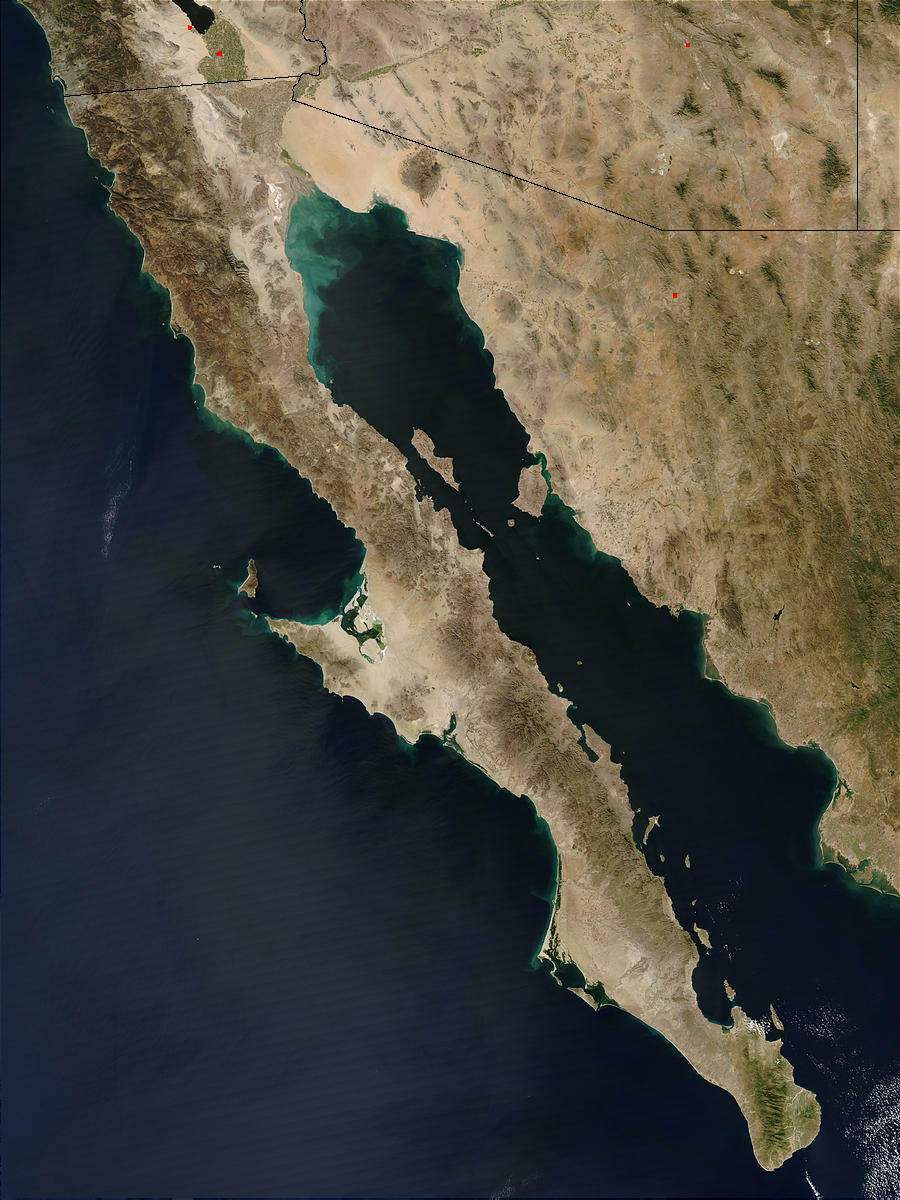
What we think is the end isn't always. Oh, for sure this is nothing new. Only that, when referencing the Colorado River, the end has and always will be the Gulf of California.

Of course the Hoover Dam has changed that end. Still, the river meets the salty ocean water in the bay, one way or another. A meeting that is as complex as any relationship and also as simple. River to sea is how it will always be. Just now, since the 30's the course of this flow is metamorphasizing, in one word: Silt.

Silt is the by-product of fresh water that has been contained and ultimately controlled. It is what leeches up from the ground and is of no nutrient value.
Not only the end of the river is full of silt at the mouth of the Gulf of California, it is increasing every year in Lake Mead, which is the reservoir for the Dam. Not a good ending.

To make an ending that is satisfying, it must lead to something else in a way that is nourishing. In a story, the end brings the reader to a place of new wonder, if it is a good ending. For the dam, the build-up of silt brings our civilization closer to an ending that does not offer so much new wonder as it does new visions for the future. We need to see beyond the end of the river, now that we know what's happening there.

Working with nature demands constant attention. It is a relationship. And though relationships do end, they should be cherished, regardless of the outcome. Thus the vision can unfold for what lies ahead, or in other words, new beginnings.

Friday, April 30, 2010

Surviving and Dreaming


The Hoover Dam at the time it was being built was a place where men felt they could survive (by way of a paycheck) and dream (by way of being part of such a fantastic project). In the beginning, the stimulation of both surviving and dreaming was enough to blast through any rock canyon and do it with amazing strength and speed.

Yet what happens when fatigue sets in and the pay becomes standard issue, in other words, what happens when the thrill is gone?

For many, there was only one thing, to keep on, get the work done, see the job through, to the end. For others, young and old alike, the dreaming began to take priority and so they stayed long enough to get to the next job, whatever it was that felt closer to that dream.

But what about those conflicted with wanting to stay (for whatever reasons, the pay, the camaraderie, the security of having a job to go to) yet also wanting to leave the dam behind for another opportunity?

In fear of compromise, we do it everyday. The link between surviving and dreaming are like old friends. They are both very different yet hold equally important modes of resilience. Not staying for security and yet not leaving for opportunity, decisions were also made based on what was best for oneself.

How do we know what this means, to do what's best for oneself? Especially at critical times in our lives? Do we always stop and weigh the good with the bad, take account of the pros and the cons? Not always. But in the end, it seems we make our decisions by way of prior and ongoing education and through the experience of our own unique indeterminable past.

We draw from what we know so far...
Thus leading us to what we will know tomorrow...