


Thursday, June 16, 2011

Sunday, December 26, 2010
Friday, September 24, 2010
The Dam, The Renaissance, da Vinci and the sound of silence

The Renaissance 1450-1600 introduced the idea of music with parts that are independent of one another--or the concept of polyphony. Music then became more complex, there were more things to hear. This layering of sound needed a kind of visualization for it to be "heard." Or, in other words, sound became multi-sensory.
Da Vinci noted two types of visualization, "Post-imagining--the imagining of things that are past," and "preimagining--the imagining of things that are to be."
In 1931, inside the diversion tunnels at the Hoover Dam, there also was this kind of urgent, consistent, polyphony of sound, with drills running, power shovels removing muck, the jumbo rig hauling men forwards and backwards as generators and compressors edged on. It was sound that could spark memory in a man. For it seems the unfamilar polyphony soon enough became familiar. And with this familiarity so etched in the mind, it would forever after quicken a memory.
In the midst of all this, dam workers were constantly looking into the throat of the tunnel, imagining the end way through. The polyphony of sounds combined with this strain in the direction of their visualization may have helped them push harder at their jobs than they would have ever expected.
Under layers of rock were layers of sound and layers of men in self-possessed silence, listening by way of visualization.
Monday, September 20, 2010
New Visions for a New West?
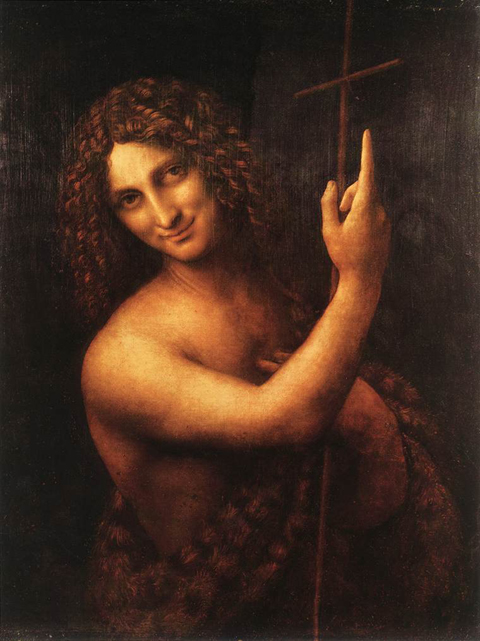
Embracing ambiguity, paradox and uncertainty was certainly a core theme in Leonardo da Vinci's work. However, such contemplation of opposition was not a popular goal in America during the early 1930s. It was important at this time to address the things that were believed to be out of control, such as the Colorado river, and controlling it, regulating it, limiting the uncertainty of its force and direction.
Those that endorsed Secretary of the Interior Wilbur's sentiment for "balancing nature" with "New Visions for a New West" were likely to find the building of the Hoover Dam nothing less than an inspiration. It would be a testament to forgetting the past and whatever horrors lurked there. Yet forgetting the past would also mean overlooking the lesson that might be learned. And as we know, history teaches nothing.
We yearn to forget how old promises have failed, we seek security, look towards a shore of hope especially when we feel we've been drowning. And thus, in the seemingly fretful times of the 30s, a new working class was born. Glad for the job which just afforded the grub many had forgotten they could grow in their own backyards. Glad to be off the streets, with something to do, working towards something, anything.
Never mind their own inspirations. Too much ambiguity. Rather compose the senses working for a vision known.
To study, to embrace the unknown, or as Leonardo da Vinci contemplated as the great "tension of opposites," would be too intense for these times, due to a shared "belief" easily clouding perceptions. A belief that this was an intense time in American history, and what people needed and wanted was relief not more tension.
Build. Employ. Don't look back. The precepts for five years as the dam went up.
Saturday, September 11, 2010
Leonardo da Vinci - building a miracle
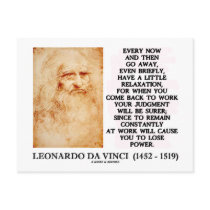
The Hoover Dam was built in five years, three shifts working 24 hours a day. The men did not have days off. It was said that if you weren't dead you better get to work. Babies or men, that's all there were on the dam. Meaning, if you cried about how hard things were, you were fired. And if you were a man, you took the work and shut up.
Yet Leonardo da Vinci, the godfather of water theory, noted this in his Treatise on Painting, "...it is well that you should often leave off work and take a little relaxation because when you come back to it you are a better judge."
Had some of the men building the dam taken breaks from their work, perhaps the percentage of accidents would have been less. There were supposedly less than 100 men killed in all five years, which is a fairly good record, considering the danger at hand. However, there were many more men that became ill, whether from dysentery (bad water and food) heat exhaustion or carbon monoxide poisoning. There is of course no record of the illnesses such as these, since if a man wasn't dead he was presumed to be working.
To be a better judge of circumstances regarding work, means really to be a better judge of what's good for you, what's good for the environment, what's good for the job at hand. Given, the dam is a miracle, built by those who worked nonstop, it's a wonder. Yet someday we may look upon the dam like we gaze upon the pyramids, and in this wonder, because of this wonder, we will find the time to relax, if only for a moment.
Thursday, September 9, 2010
Leonardo da Vinci and The Hoover Dam

(http://i.ytimg.com)
Leonardo da Vinci once wrote, "The highest happiness becomes the cause of unhappiness..."
Might this quote be applied to the building of the Hoover Dam? To many, the dam represents a kind of highest happiness, particularly regarding its artful design, it's reach into the sky at 725 feet. It was an amazing feat in the 1930s when it was finished, and remains a landmark of the North American continent.
However, when understanding that this dam changed the Colorado River permanently, changed its course forever, marking the evironment in ways that can be considered destructive, the dam is nothing to be proud of. To some, it is seen an actual cause of unhappiness.
Therefore, would Leonardo da Vinci support the idea of building the Hoover Dam today? As a means of controlling what once was a river prone to flooding, he may have seen the dam as productive. He may have seen it as a means to Southern California obtaining their highest happiness of irrigation and abundant water supply.
Yet, he also may have supported those who believe to tame a river is a means of destroying it and the environment, albeit slowly. He may have taken a progressive look into the future and perceiving factors such as silt build up, salinity factors, use and pollution of watersheds, he may have, given enough time, discovered another way to control the river.
I'd like to think da Vinci would participate in viewing the ecological factors of this dam, (knowing first what would cause unhappiness instead of the other way around) and demonstrate through his art, his power of observation, an analysis that would extend beyond immediacy or profit. In other words, I would like to believe he'd find the elements of the river sublime, of the highest happiness. And thus any project that would change its course would be in effect, reverently considered.
Tuesday, September 7, 2010
Leonardo da Vinci's experience in the belly of the whale

First, to address the belly of the whale...
As Joseph Campbell explains:
The idea that the passage of the magical threshold is a transit into a sphere of rebirth is symbolized in the worldwide womb image of the belly of the whale.
The hero, instead of conquering or conciliating the power of the threshold, is swallowed into the unknown and would appear to have died. This popular motif gives emphasis to the lesson that the passage of the threshold is a form of self-annihilation. Instead of passing outward, beyond the confines of the visible world, the hero goes inward, to be born again...[a] life-centering, life-renewing act.
Leonardo da Vinci took on the world by asking questions about everything he experienced. This said, he may have appeared continually passing across this threshold, from outside to inside and back again. Perhaps this is why he did not finish his work at times. He was constantly in passage, neither outward, beyond the confines of the visible world, nor inward, engaging in so-called self-annihilation.
Therefore, da Vinci might be said to be an explorer rather than a seeker. His observations rapid, nearly brisk. His wellspring of questions allowing him transitions from one subject to another seemingly effortless. For example, drawings of his studies of birds in flight might occur in the morning while his theory of water may have been thought through late at night under a yellow-flamed kerosene lamp.
Saturday, September 4, 2010
Leonardo da Vinci's power to question

(Leonardo da Vinci's drawing (vision?) of a flying machine)
In the book How to Think like Leonardo da Vinci by Michael J. Gelb, a parallel of our time with the Renaissance can be a starting point to view what might be called "the power of the maestro."
The Renaissance was a time in history that occurred after the Black Plague swept through Europe and eliminated almost one half of the population. As the wealthy began to invest in independent scholarship, answers were sought outside of prayer and dogma. Intellectual energy surged at this time and human power and potentiality was reborn. This included a number of discoveries and inventions such as the mechanical clock, the magnetic compass and the printing press. It was precisely this passion for discovery that helped to meet the challenges of the time.
With no concept of time in the 1400s, versus being controlled by the clock in the 2000s, this parallel remains: to be an independent thinker requires one to recognize one's power to question. It is this power that leads one, as it did da Vinci, to develop theories or as da Vinci suggests, "to work miracles..." da Vinci.
Thus the miracle of understanding something such as the power of water lies in the questioning of that power.
Consequently, through this questioning comes knowledge, "I know how to cut off water from the trenches...in conducting water from one place to another."
Therefore is it a guess or a theory, if Leonardo da Vinci knew that independent thinking would result in the building of the Hoover Dam, would he consider it a miracle of human genius? I believe so.
His drawings, as we shall see in further blogs, proves his vision for things unheard of and never before considered were, in fact, miracles in the making.
Friday, September 3, 2010
Leonardo da Vinci's water theory

Leonardo da Vinci--Water Studies c. 1513
Leonardo da Vinci was intrigued by water, perhaps even feared water. His water theory can be considered the bedrock of hydrology in the history of the study of water.
He was probably the first hydrological experimentalist to design and build his own instruments to test his hypotheses.
Da Vinci developed hypotheses while describing and classifying hydrological processes. For example, he understood that because of the hydrological cycle, water would pass through the major river systems numerous times.
His description of water is "the vehicle of nature" ("vetturale di natura"), believing water to be to the world what blood is to our bodies.
Leonardo described water as "the vehicle of nature" ("vetturale di natura"), believing water to be to the world what blood is to our bodies.
Leonardo understood that water circulated according to fixed rules. The fact that it falls as rain or rises up from springs under the ground.
Accordingly, he understood that water is indispensable to humans, animals and plants, yet it can also be the instrument of their destruction. Its power is irresistible.
Leonardo's study of the motion of water suggests it was a way in which to understand his own fear of moving water.
He supposed the principle of erosion: "Water gnaws at mountains and fills valleys. If it could, it would reduce the earth to a perfect sphere" (Codex Atlanticus, 185v).
Leonardo studied water perhaps to be able to control it. He lived through terrible floods and storms, he witnessed destruction by water first hand.
This is just the tip of the iceberg regarding da Vinci, his water theory and his thoughts on the subject of water. More to come in future blogs...
Thursday, September 2, 2010
hydrology--the cycle of life

We are all familiar with the circle of life, as Simba the lion learns in the film The Lion King
However without the cycle of life, or the way in which water moves throughout the Earth, there would be no life at all.
Hydrology is the study of the way in which water moves throughout the Earth through different pathways and at different rates. The first example of this is evaporation of water from the ocean, which forms clouds. As the clouds drift over the land it produces rain. The rainwater flows into lakes, rivers, or aquifers. The water in lakes, rivers, and aquifers then either evaporates back to the atmosphere or eventually flows back to the ocean, completing a cycle.
As Leonardo da Vinci discovered in the early 1500s, "Water is the life force of all nature." In effect, water as it moves through its cycle is life itself. If we harm the water, we are harming ourselves.
However we do not always know or understand the ways in which we are harming the water. When a dam is built it is said to better use the water in an area, use the water to perform tasks, such as generate electricity or to be used for an area a long way away. To ask water to perform these tasks is not necessarily wrong, but if it means the water will be harmed too greatly by this use (and sometimes there may be no way of knowing until later) then we need to learn from this.
This gentle spirit of caring for water and its cycle will mean that life can continue for all creatures here on earth. To care about water means to care about ourselves in a beautiful and necessary way.
Tuesday, August 17, 2010
The Father of Public Power--David E. Lillenthal
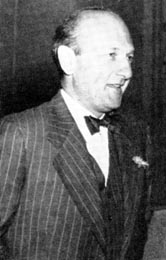
From http://www.tva.gov/heritage/illenthal/index.htm
The Father of Public Power
Boyish in appearance but hardheaded and knowledgeable, David Lilienthal built the TVA power system according to one guiding principle: affordable power for everyone in the TVA region.
When people met TVA’s three original Directors, he was the one who looked out of place. Two of the triumvirate were white-haired academics. The third, and the last to join, was not yet 34 — more than 20 years younger than either of his colleagues.
He looked even younger than that. During his first days at TVA in 1933, David Lilienthal was sometimes mistaken for an office boy. His youthful appearance belied his extensive experience and accomplishments.
The Tennessee Valley owes its network of municipal and cooperative power distributors to the vision of David Lilienthal, one of TVA’s three original directors.
Born in the back of a small-town grocery store in Morton, Ill., the son of a struggling Jewish family, Lilienthal grew up in Indiana with dreams of being a writer. He attended DePauw University, graduated when he was only 20, and went on to Harvard Law School. As a young lawyer he handled cases for the city of Chicago and, still in his twenties, developed a reputation for having a comprehensive understanding of public utility problems.
Through his litigation work for the city, Lilienthal came to believe there were some services so essential to modern day-to-day living that they must be made available and affordable for everyone.
From http://www.tva.gov/heritage/illenthal/index.htm
Friday, August 13, 2010
from the gallery

This photo was taken from the gallery of photos inside the Hoover Dam Visitors Center. It represents the heart of the dam, those who worked to build it. When we think about what it takes to accomplish something great, it is never by the hands of one person, yet one person contributes so much. Synergy, in fact, in which the sum of the parts are greater than the whole.

Sunday, August 8, 2010
Waiting for Work
The folks down at Ragtown were waiting. It was spring, 1931, the heat starting to get to them. They made roofs with rags. They soaked their clothes to stay cool. They weren't praying for a miracle, they'd lived through so much, this was the miracle, to survive. They'd expected life to be so good, it had been good for a long time. But now, they waited.
They waited to hear the news about the job. It was all about the job. And Frank T. Crowe, the engineer representing the six companies that had landed the job to build the dam was driving into Ragtown, mid day.
Jeers and cheers went out into the warm air. "What are you going to do, when are you going to do it? We want a job, Mr. Crowe, we'll do anything!"
But Crowe didn't say a word. He was there to inspect the river, see it from this level, at the base of this red bull, the enormity of the project. He didn't answer anyone for there was nothing he could say...yet. It would all come soon enough.
Patience worn as a blanket used for a roof, anger filled the lungs of those witnessing Crowe's short visit.
It made no difference.
Crowe would do what he needed to do, when he needed to do it. Much like the people staggered throughout the camp there in Ragtown, just from a different viewpoint, different circumstances, but he too was waiting to make his move.
The Hoover Dam was built on this kind of time, in which waiting and needing were so intertwined.
They waited to hear the news about the job. It was all about the job. And Frank T. Crowe, the engineer representing the six companies that had landed the job to build the dam was driving into Ragtown, mid day.
Jeers and cheers went out into the warm air. "What are you going to do, when are you going to do it? We want a job, Mr. Crowe, we'll do anything!"
But Crowe didn't say a word. He was there to inspect the river, see it from this level, at the base of this red bull, the enormity of the project. He didn't answer anyone for there was nothing he could say...yet. It would all come soon enough.
Patience worn as a blanket used for a roof, anger filled the lungs of those witnessing Crowe's short visit.
It made no difference.
Crowe would do what he needed to do, when he needed to do it. Much like the people staggered throughout the camp there in Ragtown, just from a different viewpoint, different circumstances, but he too was waiting to make his move.
The Hoover Dam was built on this kind of time, in which waiting and needing were so intertwined.
Wednesday, August 4, 2010
The Norman Y. Mineta: A Boy from San Jose
Here is a documentary produced by friend, Samantha Cheng, which unfolds the story of Norman Y. Mineta, born in 1931, who through his life has sought the path that gives the greater good.
Recognizing again, the resilience of American people, those who not just live upon the land, but with and for its people.
Thursday, July 22, 2010
Apaches that worked on the dam


the Ancient Cibuque or White Mountain Apache once lived here in Cibuque or Fort Apache.
Nine Apaches worked on the dam. Their reputation as canyon wall scalers preceded them. Sadly, their names to date are unknown.
Tuesday, July 20, 2010
Hero's Journey--IV Belly of the Whale

Jake Adams, the protagonist of the novel, Hard Luck finds out he really is alone when he finds himself unable to act, so overwhelmed with desires of his heart and will.
Until now his life has been met with tragedy and loss yet he's been surrounded by the support of those who care about him. Now he begins to experience what Joseph Campbell notes as the new world and new self.
As the work begins in the diversion tunnels, the false light inside, the size of the tunnel itself of fifty feet in height, is a symbol of Campbell's "belly of the whale" in which the protagonist enters willingly, from the known world to another that will bring about metamorphosis.
Monday, July 19, 2010
The Mighty Atom


Joseph Greenstein, the Mighty Atom, should have died as an infant, instead he lived and became one of the strongest men of his time. At 5' 5" and 140 lbs. he could pull a car by attaching his own hair. He developed secrets to his strength, based on near death experiences, which made him aware of the energy each person possesses.
A strongman to the nth degree, a man of this stature was needed in his day to encourage people in their striving and misfortunes, to be an example to others to develop good habits that help a person and not hinder them from helping themselves and ultimately others. When World War II broke out it was the Might Atom that went through the state of New York recruiting for the police force, offering men an opportunity to learn martial arts, to become stronger than they believed they could be.
A precursor to future superheroes, Mr. Greenstein, the Mighty Atom, was the authentic article.
Thursday, July 15, 2010
Black Canyon

This picture was taken before the turn of the 20th century. It reveals the darkness of this canyon, rock that reaches to the sky, the river subdued.
It is Black Canyon not Boulder Canyon where the final dam project was set. It is the highest section of the El Dorado mountains, yet a narrow passageway for the river itself. It is unique for it's precambrian mineral composite. It was virtually unknown until the dam was to be built.
The men working on this dam were told the Colorado River was wild. They believing it to be a river needing to be tamed. Yet when the workers stood on the shores here in Black Canyon did they feel the wildness of this river? Were they immersed in the relationship of rock against water, water against rock? Did those 5,000 workers question what they were doing? Were they really only here for a wage of four dollars a day? Did anybody stop to wonder, here in Black Canyon, not only the magnitude of the place but the smallness of their very being?
Guy Lombardo, Kate Smith, "RIVER STAY 'WAY FROM MY DOOR" (1931)
Bandleader and musician, Guy Lombardo and singer, Kate Smith were very popular in the early 30s. The song, 'River Stay 'Way from Me' is timely.
At the dam site, radio broadcasts weren't heard much until the men moved into the dormitories in Boulder City in '32. However, this might have been just the tune to play at the first dance celebrating the start of the dam in July of 1931.
...What is music to a culture but an expression of its hope and an acceptance of what can change in the blink of an eye as well as over time...
Guy Lombardo, Kate Smith "TOO LATE" (1931)
Picture yourself, after months of mucking on the roadbed, the groundbreaking for the dam begins. For this honor you've been invited to the American Legion for a dance. Here, women and girls from Las Vegas and the soon to be built town of Boulder City arrive, as well as those from Ragtown that may have temporary residence but nonetheless share in the excitement.
Men smoke cigars outside the hall, women sip fruit punch, cool and delicious. It's late spring, 1931, and the music of Guy Lombardo, with the lilting voice of Kate Smith play on the gramophone, as if made for this night. Yes there are some things that are "Too Late" but there's an amazing amount of work ahead that nobody knows just how dramatic it will be. And above it all, regained hope fills the air.
Subscribe to:
Posts (Atom)

 Posts
Posts

